
iFlow CLI Example
Call OpenAI-compatible iFlow/custom HTTP endpoints via the iflow-cli npm package in OpenSandbox.
Start OpenSandbox server [local]
Pre-pull the code-interpreter image (includes Node.js):
shell
docker pull sandbox-registry.cn-zhangjiakou.cr.aliyuncs.com/opensandbox/code-interpreter:v1.0.1

# use docker hub
# docker pull opensandbox/code-interpreter:v1.0.1
Start the local OpenSandbox server, logs will be visible in the terminal:
shell
uv pip install opensandbox-server
opensandbox-server init-config ~/.sandbox.toml --example docker
opensandbox-server
Create and Access the iFlow Sandbox
shell
# Install OpenSandbox package
uv pip install opensandbox

# Run the example (requires SANDBOX_DOMAIN / SANDBOX_API_KEY / IFLOW_API_KEY; IFLOW_BASE_URL has a default)
uv run python examples/iflow-cli/main.py
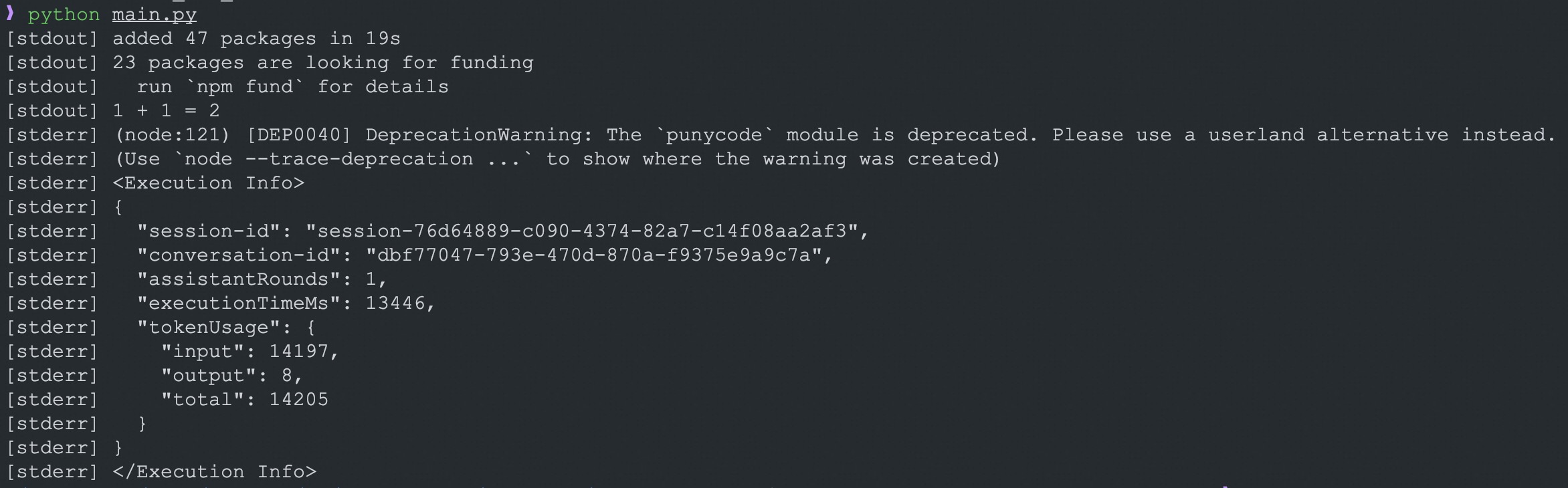
The script installs the iFlow CLI (npm install -g @iflow-ai/iflow-cli@latest) at runtime (Node.js is already in the code-interpreter image), then sends a simple request iflow "Compute 1 + 1.". The API key and endpoint are passed via environment variables.
Environment Variables
SANDBOX_DOMAIN: Sandbox service address (default:localhost:8080)SANDBOX_API_KEY: API key if your server requires authentication (optional for local)SANDBOX_IMAGE: Sandbox image to use (default:sandbox-registry.cn-zhangjiakou.cr.aliyuncs.com/opensandbox/code-interpreter:v1.0.1)IFLOW_API_KEY: Your iFlow/DashScope API key (required)IFLOW_BASE_URL: The iFlow API endpoint URL (default:https://apis.iflow.cn/v1)IFLOW_MODEL_NAME: Model to use (default:qwen3-coder-plus)
References
- iFlow CLI - Official iFlow CLI site
此页内容来自仓库源文件:
examples/iflow-cli/README.md